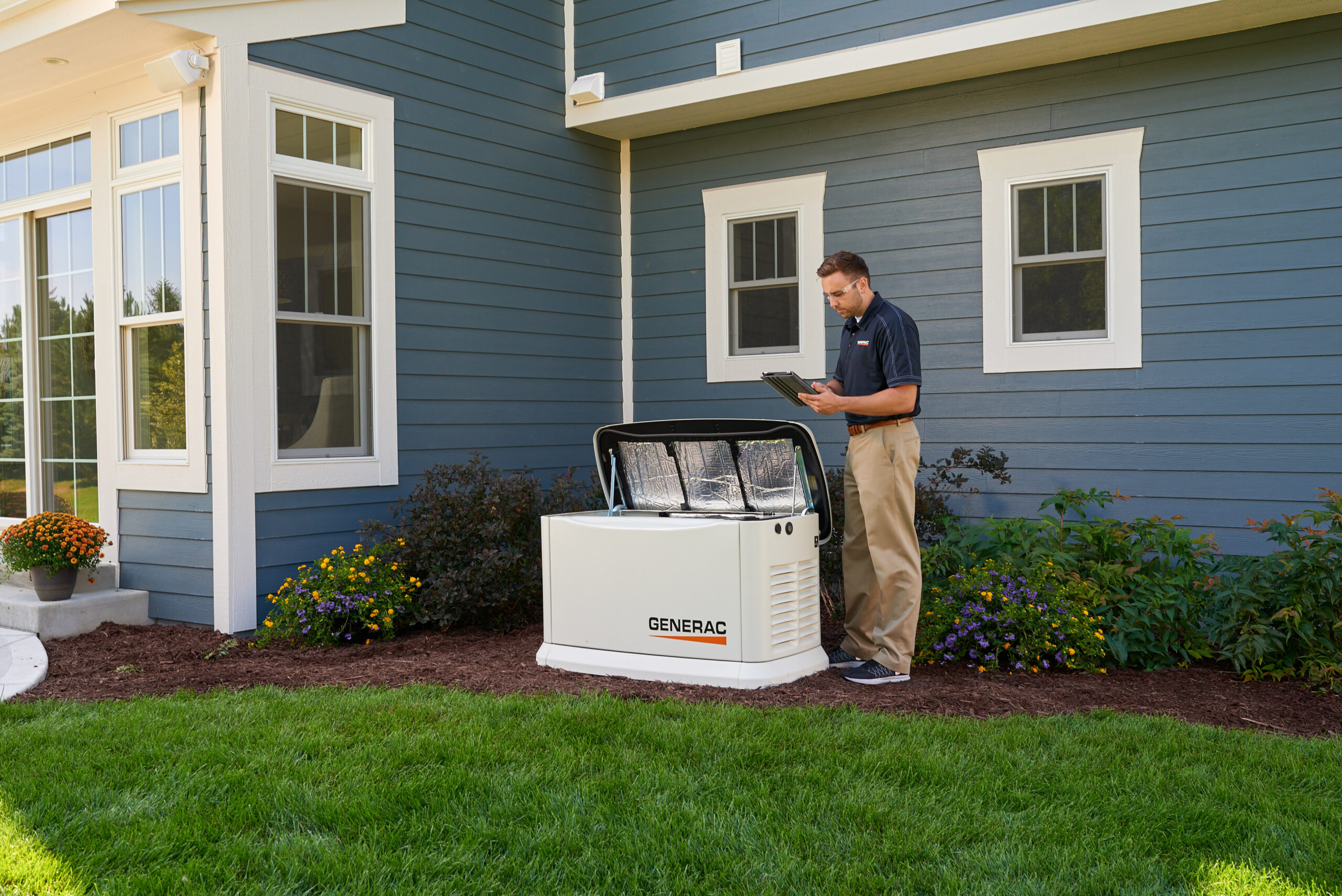
If you’ve been through a nor’easter or a summer storm on the Jersey Shore and watched your power go out for three days, you already understand the value of a whole-home generator. The question most homeowners have before making the call isn’t whether they want one, it’s what it’s going to cost.
This guide breaks down exactly what you’ll pay for a backup generator installation in NJ, including the Generac unit, labor, transfer switch, permits, and any electrical work your home may need before everything gets connected.
What Does A Generator Installation Cost In NJ?
For most single-family homes in NJ, a complete standby generator installation runs between **$8,000 and $15,000**, depending on the size of the generator, your fuel source, and whether your electrical panel needs any upgrades.
Here’s a general breakdown:
| Component | Typical Cost Range |
Generac generator unit (10kW-22kW) | $3,500 to $7,000 |
Automatic transfer switch | $500 to $1,500 |
Installation labor | $1,500 to $3,000 |
Concrete pad | $200 to $600 |
NJ permits and inspection | $200 to $500 |
Gas line extension (if needed) | $500 to $2,000 |
Panel upgrades (if needed) | $1,500 to $4,000 |
Most homeowners with natural gas service and a reasonably modern electrical panel land in the $9,000 to $12,000 range for a properly sized, whole-home Generac installation.
The Biggest Factors That Affect Your Generator Cost
Choosing the Right Generator Size (kW) for Your Home
The size of the generator you need depends on how much of your home you want powered during an outage. A 10kW unit handles essential circuits, an HVAC system, refrigerator, and some lighting. A 22kW or larger unit can power your entire home without compromise.
Generac’s most common residential models for NJ homes:
– 10kW: Covers essential circuits. Good for smaller homes or budget-conscious installs. Units run approximately $3,500 to $4,500.
– 18kW*: A solid all-around choice for most 2,000 to 3,000 square foot homes. Units run approximately $4,500 to $6,000.
– 22kW: Whole-home coverage for larger homes. Units run approximately $5,500 to $7,000.
Using Natural Gas vs. Propane
Most homes in Point Pleasant, Brick, and the surrounding shore towns have natural gas service, which is the cheaper and more convenient option for running a standby generator. Natural gas connects directly to your home’s existing supply line, so there’s no tank to refill or worry about running dry.
If you don’t have natural gas, propane is the alternative. You’ll need a 250 to 500 gallon propane tank installed on your property, which adds $800 to $2,000 to the project and requires ongoing refueling.
Automatic vs. Manual Transfer Switch
A standby generator with an automatic transfer switch (ATS) is the standard for whole-home backup power. When the grid goes down, the ATS detects the outage and starts the generator automatically, usually within 10 to 30 seconds. You don’t have to do anything.
A manual transfer switch costs less but requires you to physically start the generator and switch circuits. For a home that’s meant to run unattended during a storm evacuation, that’s not practical.
The ATS is worth the extra cost. Budget $500 to $1,500 for it, which is typically included in most electrician quotes.
Electrical Panel Requirements
If your home has a 100-amp panel or older wiring, your electrician may recommend a panel upgrade before the generator is connected. A properly sized standby generator needs a panel that can handle the load.
A 200-amp panel upgrade in NJ typically runs $1,500 to $3,500 depending on the scope of work. It’s not always required, but it’s something our qualified electricians will assess upfront during the estimate.
Whole-Home vs. Essential Circuits: Which Is Right for You?
Whole-Home Generator Backup
Having whole-home backup means the generator powers everything, including HVAC, appliances, lighting, and electronics. This is the most convenient option and is what most shore homeowners with larger homes choose, especially if the home doubles as a rental property.
Essential Circuit Backup
Essential backup is exactly how it sounds, meaning the generator is connected only to the circuits you designate as critical: refrigerator, a few lights, your well pump (if applicable), and maybe one HVAC zone. This option costs less upfront because a smaller generator unit is typically sufficient.
Your Generator Installation - Choose A Generac Certified Installer
Not every electrician is qualified to install Generac equipment. Generac’s dealer network trains and certifies installers specifically on their product line, and that certification matters for a few reasons.
Warranty Peace Of Mind
Generac’s standard residential warranty requires installation by a certified professional. An uncertified install can void your coverage.
Proper Sizing & Installation Done Right The First Time
Certified installers know the equipment. They know how to size the unit correctly, configure the ATS, and set up remote monitoring through Generac’s Mobile Link app if you want it.
Overall Accountability
If something goes wrong, a certified dealer stands behind the installation. Someone who did it as a side job probably doesn’t.
The good news? Our team at Savacool Electric is a Generac certified installer serving Point Pleasant, Brick, Brielle, Manasquan, Spring Lake, Bay Head, Howell Township, and the surrounding shore communities. Nick Savacool has been doing this work since 2003, and every technician on the team is background-checked and drug-tested before ever setting foot in your home.
For more on Generac’s residential product line and warranty coverage, visit Generac’s official website.
Frequently Asked Questions
Most residential generator installations take one to two days once the permit is in hand. The generator pad, gas line work, transfer switch installation, and electrical connections are typically completed in a single visit or two back-to-back days.
Yes. Generac requires a level, stable surface for all standby units. A concrete pad is standard and is included in most installation quotes. Some installers use composite pads as an alternative.
The generator itself, once installed as a permanent fixture, is typically covered under your homeowner's policy. Check with your insurance provider to confirm coverage and update your policy after installation
It depends on the HVAC system. A 10kW unit can handle a standard central air system in most cases, but not simultaneously with heavy loads like an electric dryer or oven. A load calculation done before installation will tell you exactly what a given unit can handle in your home.
Free Same-Day Estimates
Get a Free Generator Installation Estimate in Point Pleasant and Ocean County
If you’re ready to stop losing power every time a storm rolls through, Savacool Electric is ready to walk you through your options. We handle everything from the permit to the final inspection, and we’ve been doing it on the Jersey Shore since 2003.
Call us at (201) 248-3247 or contact us online to schedule a free estimate. We serve Point Pleasant, Brick Township, Brielle, Manasquan, Spring Lake, Bay Head, Howell Township, and the surrounding areas.